Most people think about candle safety in terms of fire. The bigger question is what the flame puts into the air you breathe. A burning candle is a small combustion device. It produces carbon soot, ultrafine particles, and a mix of volatile organic compounds such as formaldehyde, acrolein, toluene, and benzene, depending on the wax, the wick, and whatever was added for scent. Those emissions are usually small next to a gas stove or a busy road, but a candle burning in a closed bedroom for four hours is not nothing. Indoor particulate levels are the number worth watching, and a portable air purifier rated for VOCs is a sensible backup if you burn candles often. Our best air purifiers for VOCs guide covers the units that handle gases rather than just dust.
Wax is only half the story. The other half is the word fragrance, or parfum, on the label. Under US labeling rules a manufacturer can list dozens of compounds under that one term, and phthalates such as diethyl phthalate are commonly used as fragrance solvents and fixatives. The CDC tracks phthalate exposure across the general population through its biomonitoring program, and its own fact sheets note that people are exposed mainly through diet, dust, and personal care products. Candles are a smaller source. They are also a source you deliberately set on fire in a closed room. The same disclosure gap shows up in toxic chemicals in personal care products, where fragrance blends hide behind an identical label.
Three variables drive what a candle emits: the wax, the wick, and the fragrance load. A fourth may matter more than all of them, and that is burn technique. A wick trimmed to a quarter inch, a draft-free spot, and a session under four hours will cut soot more than switching waxes ever will. Lead-core wicks were banned by the US Consumer Product Safety Commission in 2003, so a new candle should use cotton, hemp, or wood. For scale on airborne particles, the EPA’s 2024 annual PM2.5 standard is 9 micrograms per cubic meter, with a 24-hour limit of 35. A cheap monitor can tell you whether your living room ever drifts near that. Broader indoor-air work, including non-toxic cleaning products, tends to move the needle more than candle swaps alone.
We compared these five picks on six criteria: the base wax and whether it is cut with paraffin, the wick material, how completely the scent is disclosed, third-party certification, burn behavior such as tunneling and soot, and cost per hour of light. None of these candles was tested in our own lab, so the assessment relies on manufacturer disclosures, published emission research, and the chemical-safety resources published by the Environmental Working Group. Where a brand hides behind the word fragrance, we say so plainly. Where a candle has a real drawback, such as weak scent throw or a brittle pillar that cracks in a cold room, that is in the cons list rather than buried in the marketing copy.
How Do the Top Options Compare?
| Candle | Best For | Wax | Wick | Scent Disclosure | Check Price |
|---|---|---|---|---|---|
| Bluecorn Beeswax Pillar | Best overall 100% beeswax | Pure US beeswax | Cotton | Unscented, no fragrance oil | Check price |
| Fontana Candle Co. | Best scented candle with disclosure | Beeswax and coconut oil | Cotton | Essential oils listed individually | Check price |
| Big Dipper Wax Works Tapers | Best unscented tapers | Pure beeswax | Cotton | Unscented, no fragrance oil | Check price |
| Brooklyn Candle Studio | Best soy candle for gifting | 100% soy wax | Cotton | Phthalate-free fragrance oils | Check price |
| Keap Candles | Best for ingredient transparency | Coconut and soy blend | Cotton | Fragrance components published | Check price |
None of the five picks uses a metal-core wick, and none is cut with paraffin based on current manufacturer disclosures. Candle brands reformulate without notice, so verify the wax and wick on the label or product page before you buy. Amazon links in the table and in the write-ups are affiliate links, which fund this site at no cost to you. We do not list dollar figures because candle pricing changes constantly; use the check price links for current rates.
1. Bluecorn Beeswax 100% Pure Beeswax Pillar Candle , Best Overall 100% Beeswax

Bluecorn Candles has been pouring beeswax in Colorado for decades, and this pillar is the closest thing to a no-compromise default. The wax is 100 percent US beeswax with no paraffin cut, the wick is unbleached cotton, and there is no fragrance oil, no dye, and no plastic sleeve on the pillar itself. Beeswax melts around 145 degrees Fahrenheit, higher than most paraffin and soy blends, so the candle burns slowly and forms a smaller melt pool than a jar candle of similar diameter. That slower burn is the reason a solid pillar can last for dozens of hours.
What you get for that trade is a faint honey smell and nothing else. If your idea of a candle is a pine and cedar throw that fills a living room, this one will disappoint you. It also has a learning curve. Trim the wick to a quarter inch before every burn, let the first burn run long enough to reach the outer edge of the pillar, and keep it out of drafts, or it will tunnel down the center and waste half the wax. Set it on a heat-safe plate, because a pillar can drip once the pool widens.
Beeswax also turns brittle in cold rooms and can crack if it sits in a garage over winter. A cracked pillar still burns, just unevenly. Cost per hour of light is the other honest downside. Beeswax costs several times more per pound than soy or paraffin, so a small pillar can run more than a large jar candle from a mass-market brand. You are paying for an unscented, unblended, single-material burn with no additive list to read. Check the Bluecorn Beeswax pillar on Amazon if you want to start there.
Key strengths:
- ✅ Advantage: 100 percent beeswax with no paraffin blend, so there is no petroleum-derived fuel in the burn.
- ✅ Advantage: unbleached cotton wick with no metal core to worry about.
- ✅ Advantage: zero fragrance oil, zero dye, and zero synthetic additives.
- ✅ Advantage: higher melting point means a slow burn and a small, contained melt pool.
- ✅ Advantage: the only scent is the natural honey note from the wax itself.
- ❌ Limitation: cost per hour of light is several times higher than soy or paraffin blends.
- ❌ Limitation: almost no scent throw, which is a dealbreaker if you burn candles for fragrance.
- ❌ Limitation: beeswax is brittle and can crack or chip in cold storage or during shipping.
Who it’s for: Choose this if you want an unscented, single-ingredient candle and you are willing to pay more per hour of burn time for it.
2. Fontana Candle Co. Essential Oil Candles , Best Scented Candle With Full Disclosure
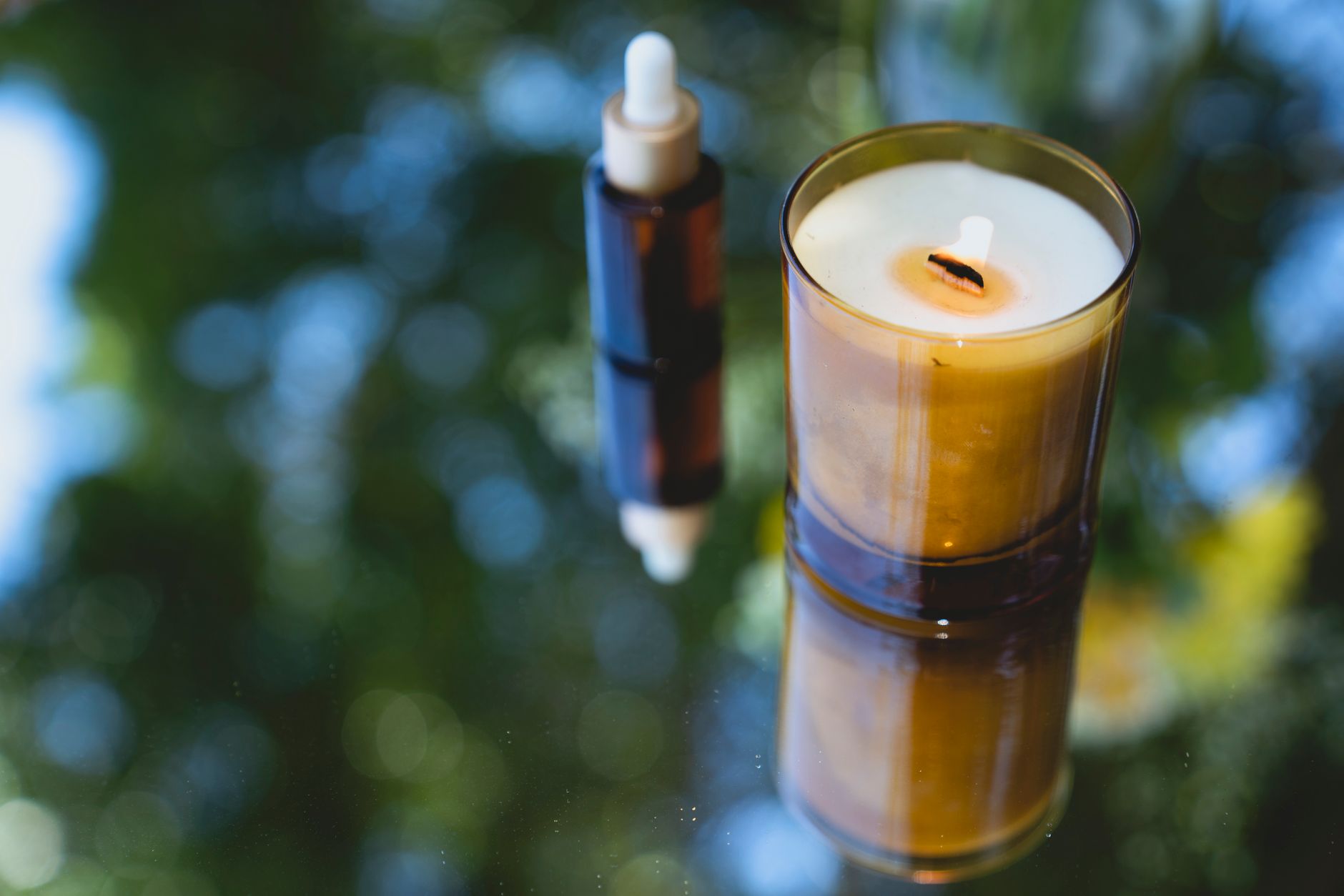
Fontana Candle Co. builds its candles around a beeswax and coconut oil blend, a cotton wick, and essential oils instead of synthetic fragrance. The company carries MADE SAFE certification, a third-party screen that checks ingredients against a published list of restricted substances, and it names every oil in a given scent on the product page. That level of disclosure is rare. Most brands will tell you a candle is clean without naming a single compound, which leaves you comparing marketing copy rather than chemistry.
The honest caveat is that essential oils are not automatically gentle. Cinnamon, clove, and wintergreen oils contain eugenol and methyl salicylate, which are documented respiratory irritants and skin sensitizers at higher concentrations. Citrus oils bring limonene, which can react with ozone indoors to form secondary pollutants including formaldehyde. Fontana’s fragrance load is low enough that the throw is soft, so the exposure is small, but a small closed bedroom is not the place to test how you react to a strong spice oil. If you are buying for a nursery or a child’s room, our non-toxic baby products guide covers the rest of that chemical load, and unscented is still the safer choice there.
Soft throw is the other trade. A Fontana candle will scent a desk, a hallway, or a bathroom. It will not fill an open-plan kitchen, and it will not compete with whatever is roasting in the oven. The beeswax and coconut blend also burns a little softer than straight beeswax, so you need to let the first burn reach the full diameter of the vessel or you will get a ring of wasted wax around the edge. Check the Fontana Candle Co. candles on Amazon to see the current scent lineup.
Key strengths:
- ✅ Advantage: every essential oil in a scent is listed individually rather than hidden under a generic term.
- ✅ Advantage: MADE SAFE certification gives you an outside screen instead of a self-declared claim.
- ✅ Advantage: beeswax and coconut oil base with a cotton wick and no paraffin.
- ✅ Advantage: low fragrance load means a gentler scent experience than a typical jar candle.
- ✅ Advantage: no synthetic phthalate fixatives to worry about.
- ❌ Limitation: scent throw is soft and will not fill a large open room.
- ❌ Limitation: some essential oils, especially cinnamon, clove, and wintergreen, are irritants and sensitizers.
- ❌ Limitation: the scent library is small and rotates, so a favorite may disappear.
Who it’s for: Choose this if you want a scented candle and you care more about seeing the full ingredient list than about throw strength.
3. Big Dipper Wax Works Honeycomb Beeswax Tapers , Best Unscented Tapers
Big Dipper Wax Works has been hand-dipping beeswax in Seattle since the early 1990s. The honeycomb tapers are pure beeswax, unscented, and wicked with cotton. Each pair is dipped repeatedly, which builds the honeycomb texture and also gives the taper a denser body than a cheap pressed taper from a grocery store. There is no jar, no metal lid, and no packaging beyond a paper band, so the waste stream is close to nothing.
Tapers behave differently from jar candles and the difference catches people out. The flame runs taller and hotter, wax runs down the outside, and a draft will send drips onto your tablecloth. Use a holder with a snug socket, or the taper will lean and eventually fall. Because there is no fragrance at all, these are the pick for a dinner table where the food is the point. They do not compete with what is cooking, and nobody at the table is breathing a synthetic musk blend while they eat.
The limitation is format. A taper only works in a holder, so you cannot set one on a shelf and walk away. It also gives off no scent, which means it will not mask cooking odors or pet smells. If you burn candles for atmosphere and light rather than for fragrance, this is the cleanest option in the lineup. Check the Big Dipper Wax Works tapers on Amazon to compare sizes.
Key strengths:
- ✅ Advantage: 100 percent beeswax with a cotton wick and no additives of any kind.
- ✅ Advantage: hand-dipped construction gives a denser taper that burns slower than pressed versions.
- ✅ Advantage: unscented, so no fragrance compounds enter the room air at all.
- ✅ Advantage: minimal packaging with no glass, metal, or plastic to dispose of.
- ✅ Advantage: the honeycomb texture makes them presentable enough for a dinner table without a jar.
- ❌ Limitation: tapers need a snug holder and will lean or drip in a draft.
- ❌ Limitation: a taller, hotter flame means more supervision than a jar candle.
- ❌ Limitation: no scent throw whatsoever, so they will not freshen a room.
Who it’s for: Choose this if you want unscented light for a dinner table or a power outage and you already own proper candleholders.
4. Brooklyn Candle Studio Minimalist Soy Candle , Best Soy Candle for Gifting
Brooklyn Candle Studio pours 100 percent soy wax into reusable amber glass jars and uses cotton wicks. The fragrance oils are described as phthalate-free, which removes one well-known class of additives from the burn. Diethyl phthalate and related compounds are common fragrance solvents and fixatives, and the CDC’s biomonitoring work has found phthalate metabolites in the majority of Americans tested, so pulling them out of a product you ignite indoors is a real improvement. It is a modest one, but it is real.
It is not full disclosure. Phthalate-free fragrance still means a synthetic blend whose individual components stay behind the label. A phthalate-free scent can contain synthetic musks, terpenes, and other aroma chemicals that also end up in the air when burned. Treat this as the middle rung of the ladder rather than the top. If a brand will not go past phthalate-free, you have no way to know what else is in the oil.
Soy wax burns cooler than paraffin, which generally means a slower melt pool and less soot, and the throw on these is genuinely strong for the jar size. The vessels are attractive and worth reusing for pens or small tools once the wax is gone. Just do not confuse good design with a complete ingredient list. The candle is a solid choice for a gift, and it is a weaker choice if your goal is to know exactly what you are inhaling.
Key strengths:
- ✅ Advantage: 100 percent soy wax rather than a soy and paraffin blend.
- ✅ Advantage: phthalate-free fragrance oils remove a common class of fixatives and solvents.
- ✅ Advantage: cotton wick with no metal core and no lead, consistent with the 2003 federal ban.
- ✅ Advantage: strong scent throw for the jar size, which most low-fragrance brands cannot match.
- ✅ Advantage: reusable amber glass vessel that does not go straight into the recycling bin.
- ❌ Limitation: phthalate-free fragrance is still undisclosed synthetic fragrance beyond that one claim.
- ❌ Limitation: no third-party certification backing the phthalate-free statement.
- ❌ Limitation: soy wax pools are soft and can tunnel if the first burn is cut short.
Who it’s for: Choose this if you want a well-designed, good-throwing soy candle and you accept that the fragrance blend is only partly disclosed.
5. Keap Candles , Best for Ingredient Transparency
Keap is a small Brooklyn operation that publishes its ingredient information in more detail than almost anyone else in the category. The wax is a coconut and soy blend, the wick is cotton, and the company states that its fragrance oils are phthalate-free and free of a list of other restricted materials. According to the company, individual fragrance components are disclosed on the product page rather than hidden under the word parfum. That is roughly the standard the EWG Skin Deep database guide pushed in personal care, applied to candles for the first time.
Keap also runs a refill and subscription model. You buy the vessel once and get wax refills shipped in paper, which cuts glass weight and packaging per burn. If you go through a lot of candles, that matters more for waste than for air quality, and it is worth noting that waste reduction is a separate problem from combustion emissions. Do not let a refill program stand in for a clean burn.
Two honest limits. First, clean fragrance is still synthetic fragrance. Without an independent lab report, the disclosure rests on the brand’s own word, and self-reported data is weaker than certified data. Second, the refill model locks you into one supplier and one refill shape, and the per-ounce cost sits at the high end of the market. If you like rotating through seasonal scents, a subscription will start to feel like a cage.
Key strengths:
- ✅ Advantage: detailed ingredient disclosure including individual fragrance components, based on company statements.
- ✅ Advantage: coconut and soy wax blend with a cotton wick and no paraffin.
- ✅ Advantage: staged that fragrance oils are phthalate-free and free of other restricted materials.
- ✅ Advantage: refill and subscription program cuts glass and packaging waste per burn.
- ✅ Advantage: smaller-batch production means formula changes are more likely to be announced.
- ❌ Limitation: clean fragrance is still synthetic, and the disclosure is self-reported rather than lab verified.
- ❌ Limitation: the refill model ties you to one brand and one refill size.
- ❌ Limitation: per-ounce cost is high, and availability of specific scents can be limited.
Who it’s for: Choose this if ingredient transparency is your top priority and you are comfortable committing to a refill subscription.
Frequently Asked Questions
Are paraffin candles toxic?
Paraffin is a petroleum byproduct, and burning it releases soot, ultrafine particles, and volatile organic compounds such as formaldehyde and toluene. The amounts from one candle are small next to cooking or traffic, but they are not zero. Ventilation and wick trimming make a bigger difference than wax type in most rooms.
Do soy candles burn cleaner than paraffin?
Comparisons generally show soy and beeswax producing less soot than paraffin under identical conditions, but results shift with wick size, fragrance load, and burn length. A trimmed soy candle beats a neglected paraffin one. A trimmed paraffin candle still burns acceptably in a ventilated room.
What candle wicks should I avoid?
Avoid any metal-core wick. The US Consumer Product Safety Commission banned lead-core wicks in 2003, but zinc and other metal cores still show up in some imports. Cotton, hemp, and untreated wood are the wicks to look for.
Do candles actually release VOCs?
Yes. Every flame produces some combustion byproducts, and scented candles add fragrance compounds on top of that. Formaldehyde, acrolein, benzene, and toluene have all been detected in candle emission studies, usually at low concentrations that fall off quickly once you ventilate.
How do I reduce soot when burning candles?
Trim the wick to a quarter inch before every burn, keep the candle out of drafts, and cap sessions at about four hours. Snuff the flame instead of blowing it out, and stop burning once only half an inch of wax remains at the bottom.
Are essential oil candles safer than regular scented candles?
They remove synthetic fragrance, which is a real step forward, but essential oils are still volatile chemicals. Cinnamon, clove, and wintergreen oils are documented respiratory irritants and skin sensitizers. Lower fragrance load plus better disclosure makes them a better pick, not a risk-free one.
What Should You Remember?
- Wick material matters as much as wax. Lead-core wicks were banned in the US in 2003, so stick with cotton, hemp, or untreated wood and skip any metal core.
- The word fragrance is the biggest unknown. A single label term can hide dozens of compounds, including phthalates used as fixatives and solvents.
- Paraffin is not automatically toxic, but it burns dirtier. Beeswax and soy tend to produce less ultrafine soot under the same burn conditions.
- Ventilation beats wax type. The EPA’s annual PM2.5 standard of 9 micrograms per cubic meter is a useful yardstick when you burn candles indoors.
- Unscented beeswax is the lowest-risk default. No fragrance oil, no dye, and a fuel that melts around 145 degrees Fahrenheit and burns slowly.
- Essential oils are not automatically gentle. Spice and citrus oils carry eugenol, methyl salicylate, and limonene, which are irritants at higher concentrations.
- Disclosure is the real quality signal. Brands that publish every ingredient beat brands that claim to be clean without naming anything.
This article is for general information only and is not medical, legal, or regulatory advice. Chemical-safety claims and product choices should be verified against current scientific research and the guidance of relevant agencies (EPA, FDA, EWG, CDC). Always follow manufacturer instructions and consult a qualified professional for health or exposure concerns.