Most drip coffee makers hide their plastic where you cannot see it. The reservoir, the internal tubing, the showerhead, and the carafe lid are usually polypropylene or ABS. Brew water sits against those parts for four to six minutes at 195 to 205 degrees Fahrenheit, the extraction range the Specialty Coffee Association publishes, and heat is the variable that drives migration out of polymers. That is the real problem with plastic free coffee makers: it is rarely the filter basket you notice, it is the hot pathway you do not. The same logic that makes you read a pan coating label applies to the machine on your counter, and our breakdown of PFAS in cookware covers why heat plus polymer contact is the pairing to avoid.
Plastic free is a spectrum, not a binary. A French press with a steel plunger and a silicone gasket is low plastic, not plastic free. A glass pour-over with a wood collar has no synthetic part in the water path at all. The distinction matters because the chemicals people ask about most, BPA and its replacements, phthalates such as DEHP, and PFAS, appear in different places and behave differently. The CDC has found BPA in the urine of the large majority of Americans it biomonitored, which tells you exposure is routine rather than exotic. No single appliance swap changes that picture. What it does is remove one repeated, hot-contact source, and repeated hot contact is the pattern that matters most. Our guide to reducing microplastics at home takes the same approach room by room.
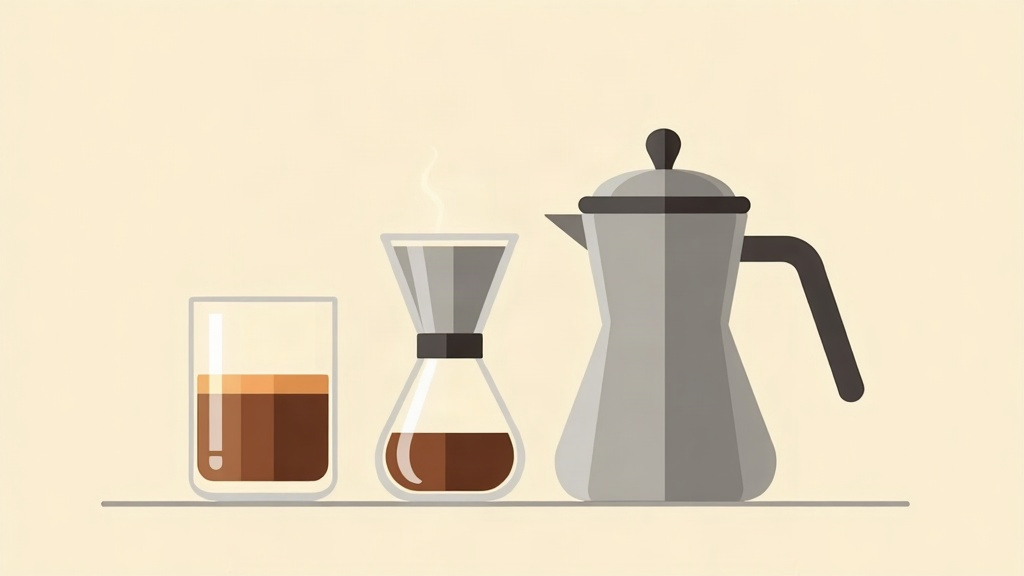
For this comparison we sorted five brewers by a single question: what touches the water? Anything with a plastic reservoir, plastic tubing, or a plastic brew basket was out, including pod machines, most budget drip brewers, and the popular press-style makers with polycarbonate housings. We then weighed brew temperature, contact time, filter media, cleaning difficulty, and how likely a part is to wear out and need replacing. A silicone gasket counts as a small mark against an otherwise steel brewer, and we say so in the entry instead of burying it. Two of the five use paper filters, two use metal or cloth, and one accepts either depending on the model. Prices shift by size and retailer, so we linked to current listings rather than quoting figures that go stale within a season.
The timing is not arbitrary. The EPA finalized drinking water limits of 4 parts per trillion for PFOA and PFOS in 2024, the lowest enforceable threshold the agency has set for any contaminant, and several states have moved to restrict PFAS in food-contact packaging. A coffee maker is not a drinking water system, but it sits at the same intersection of heat, water, and polymer. The FDA regulates food-contact materials and reviews the substances used in them, though it does not pre-approve every finished appliance on the shelf. If your tap water is part of the concern, start with a filter rated for PFAS removal before you replace the brewer, because water is roughly 98 percent of the cup.
How Do the Top Options Compare?
| Coffee maker | Best for | Brew method | Plastic in the hot water path | Check price |
|---|---|---|---|---|
| Chemex Classic 6-Cup | Best overall | Pour-over with bonded paper filter | None, glass with wood collar and leather tie | Check price |
| Frieling Stainless Steel French Press | Best for durability | Full immersion with steel mesh | None in the vessel, small seal in the plunger assembly | Check price |
| Stainless Steel Moka Pot | Best stovetop espresso style | Pressure brewing on a burner | None in the body, silicone gasket between chambers | Check price |
| Yama Glass Siphon | Best for clarity and showpiece brewing | Vacuum siphon with cloth or steel filter | None in the vessel, silicone seal at the bowl joint | Check price |
| Hario V60 Ceramic Dripper | Best budget single cup | Pour-over with paper, cloth, or steel filter | None, fired ceramic with a glaze | Check price |
Plastic content was assessed by the material of the parts that contact hot water, not by brand claims. Gasket materials vary by production batch and model year, so confirm the parts list with the seller before buying. Prices change constantly and are not quoted here. None of these brewers removes exposure from other sources, and none is a medical device.
1. Chemex Classic 6-Cup Glass Pour-Over , Best Overall Plastic-Free Brewer
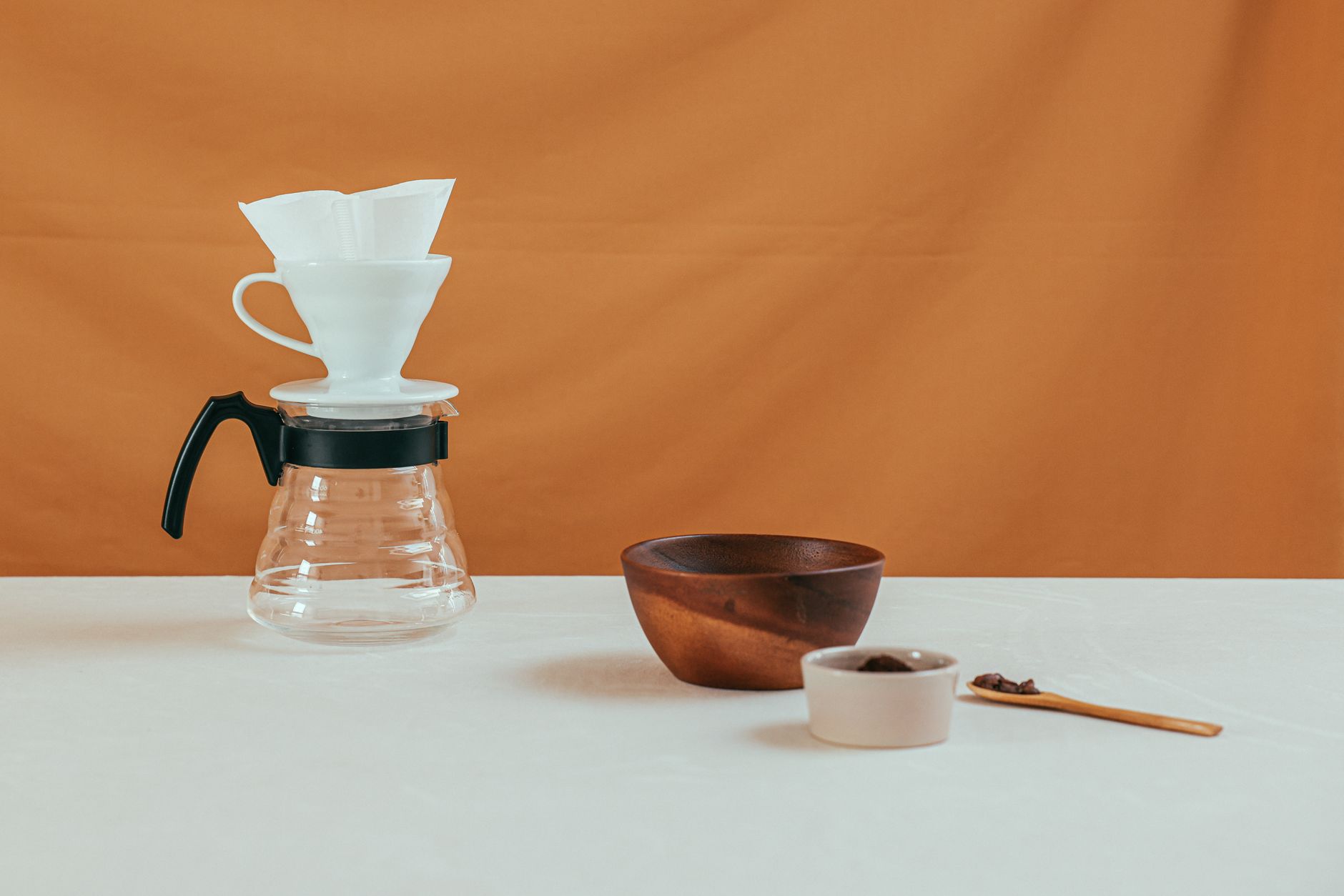
The Chemex is the reference point for this category. A single piece of borosilicate glass forms both the flask and the funnel, a wood collar wraps the waist, and a leather tie holds the collar in place. No plastic touches the water at any temperature, which is why it keeps landing at the top of lists like this one. Brew temperature lands right in the 195 to 205 degree range, and glass neither reacts with coffee acids nor holds onto flavors from the last brew. The thick bonded paper filter traps most oils and fine sediment, so the cup reads clean and tea-like compared with a French press.
Brewing takes attention. You heat water separately, rinse the filter, and pour in stages over about four minutes. Use too fine a grind and the filter clogs and the bed stalls. The 6-cup size yields roughly 30 ounces, enough for two large mugs, and the 8-cup and 10-cup versions scale up without changing the material story. Filter cost accumulates over a year and the proprietary squares are not cheap. A reusable stainless mesh insert exists if you want to cut both cost and waste, though it changes the body of the cup noticeably.
One practical caution: the wood collar should never go in the dishwasher, and the leather tie loosens over time. Hand wash the glass with a bottle brush and warm water. If you like the idea of glass and steel but want a wider material comparison for the rest of the kitchen, our PFAS-free cookware guide covers the same chemistry applied to pans and baking sheets. Check the Chemex Classic 6-Cup on Amazon
Key strengths:
- ✅ Zero plastic in the water path, including at full brew temperature
- ✅ Glass does not absorb flavors, so light roasts and dark roasts do not bleed into each other
- ✅ The bonded paper filter produces the cleanest cup of any brewer on this list
- ✅ Replacement collars, ties, and carafes are widely available and cheap
- ✅ Works on any counter with no electricity and no moving parts to fail
- ❌ Demands a gooseneck kettle, a scale, and about four minutes of active pouring
- ❌ Proprietary paper filters are a recurring cost and a waste stream
- ❌ The glass is thin and a knock against the sink ends the brewer
Who it’s for: Choose this if you want the cleanest possible material list and you enjoy a hands-on morning routine.
2. Frieling Stainless Steel French Press , Best for Durability and Full Immersion
Frieling builds its French press from 18/10 stainless steel with a double wall, so the carafe holds heat and cannot shatter on a tile floor. Full immersion keeps grounds in contact with water for the entire steep, usually four minutes, which extracts more oils and produces a heavier body than any paper-filtered method. The vessel itself contains no plastic. The mesh screen is steel, the rod is steel, and the frame that holds the screen is steel.
The honest caveat is the plunger seal. Many stainless French presses, including some Frieling models, use a small silicone or rubber ring to create the wipe against the inner wall. Silicone is generally regarded as more inert than polycarbonate, PVC, or ABS, and it tolerates brew temperature better than those materials, but it is still a synthetic polymer sitting in the hot path. Ask the seller for a parts diagram before you buy if that matters to you, and replace the ring the moment it stiffens.
Cleanup is where steel wins and loses. You cannot see through the wall, so fines clinging to the bottom are easy to miss, and the double wall should not be submerged if the seam is not sealed. Rinse it immediately, use a bottle brush, and keep the plunger assembly out of the dishwasher. Coarse grind, four minutes, slow press. It handles eight cups for a crowd or a single mug if you scale the dose down. Check the Frieling Stainless Steel French Press on Amazon
Key strengths:
- ✅ All steel body means nothing to break and nothing to chip
- ✅ Full immersion extraction gives a heavy, oil-rich cup that paper filters strip out
- ✅ Double wall keeps coffee hot for well over an hour without a hot plate
- ✅ No recurring filter purchases and no paper waste
- ✅ Works with coarse supermarket grind, so a burr grinder is optional
- ❌ The plunger seal is usually silicone, which is a synthetic part in the hot path
- ❌ You cannot see the bottom, so sediment builds up if you rinse carelessly
- ❌ Muddy cup and grit at the bottom if the grind runs too fine
Who it’s for: Choose this if you want a brewer that survives drops, camping trips, and a decade of daily use.
3. Stainless Steel Moka Pot , Best Stovetop Espresso Style Without Aluminum
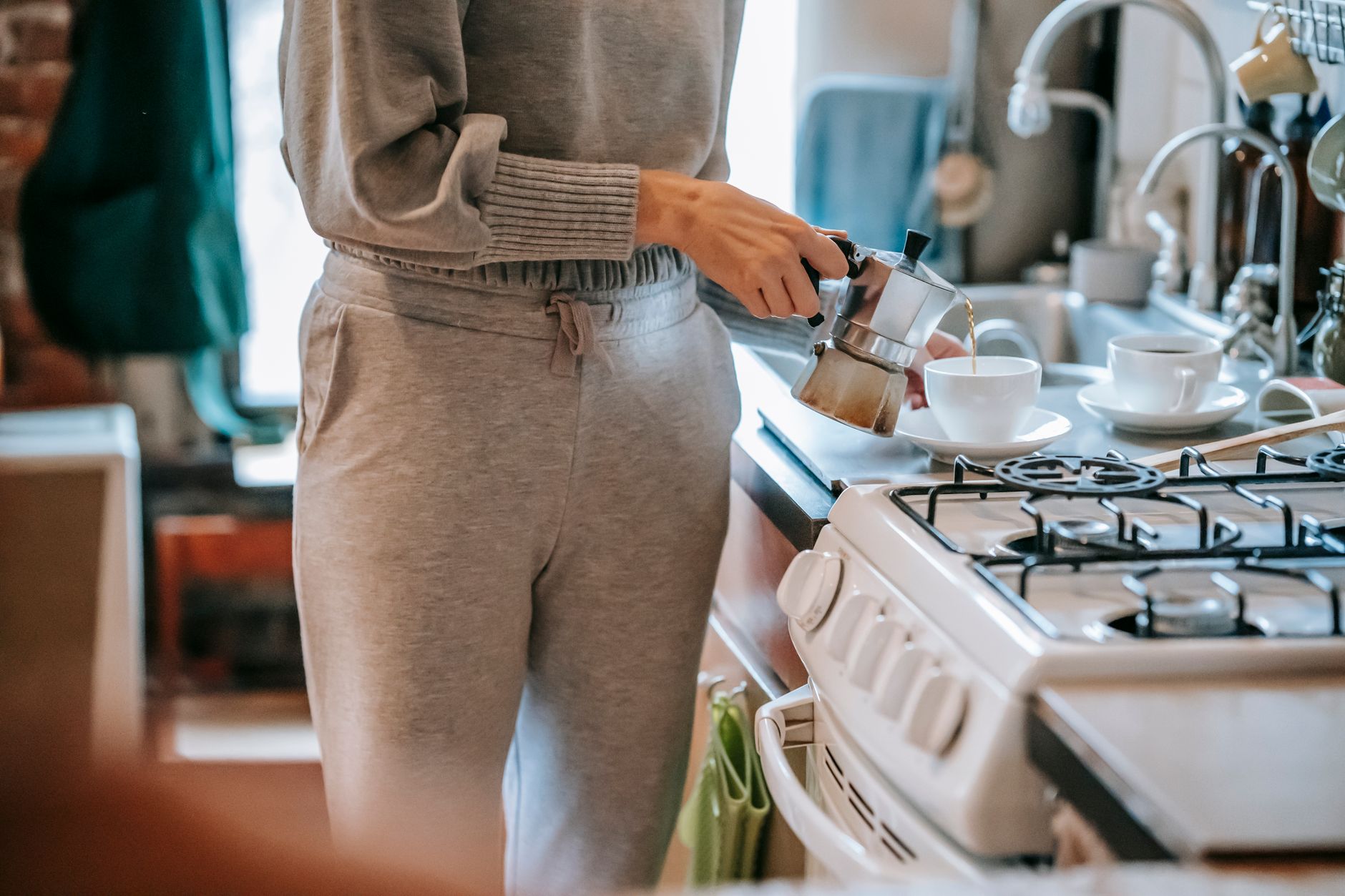
Classic moka pots are aluminum, and that is the reason some buyers look elsewhere. The evidence that aluminum cookware causes harm at normal use is weak and contested, and most health agencies treat dietary aluminum as the larger source. Still, if you would rather not brew acidic coffee against aluminum under pressure, stainless steel moka pots from Italian makers such as Giannini use the same three-chamber design in 18/10 steel. The output is a concentrated, roughly 1 to 2 bar brew that lands much closer to espresso than to drip.
Two parts deserve scrutiny. The gasket between the upper and lower chambers is silicone on nearly every moka pot, and it sits directly in the steam and coffee path. It is also the part that fails first, often within a year or two of regular use, and a hardened gasket leaks and brews cool. Buy spares when you buy the pot. The second part is the filter plate, which should be steel rather than a coated disc that can flake.
Technique matters more here than with any other brewer on this list. Pre-heat the water, fill the basket level without tamping, keep the flame below the base so the handle does not melt, and pull the pot off the heat the moment the flow turns pale and sputters. Burned coffee tastes like burned coffee, and it also means longer contact at higher temperature. Dry the threads before storage so the gasket does not seize. For more on choosing metals for hot, acidic contact, see our non-toxic cookware picks. Check the stainless steel moka pot on Amazon
Key strengths:
- ✅ Stainless steel body avoids the aluminum question entirely
- ✅ Produces a strong, espresso-like concentrate without electricity
- ✅ Compact enough for small kitchens and it packs flat for travel
- ✅ No paper filters, so running costs are limited to gaskets
- ✅ Replacement gaskets and filter plates cost very little and are easy to source
- ❌ The chamber gasket is silicone and needs replacing roughly every one to two years
- ❌ Punishing technique curve, and a moment of distraction scalds the brew
- ❌ Small capacity that makes more than two espressos in a row a chore
Who it’s for: Choose this if you want espresso-style strength from a stovetop brewer and want to avoid aluminum.
4. Yama Glass Siphon Brewer , Best for Clarity and Showpiece Brewing
The vacuum siphon is the most theatrical brewer here and one of the cleanest in material terms. Water in the lower glass globe is pushed into the upper bowl by vapor pressure, mixes with the grounds, and is drawn back down through a filter when the heat drops. Yama makes 5-cup and 8-cup versions in borosilicate glass with a stainless steel filter housing and either a cloth or steel filter. Some models ship with a metal or wood base. The coffee itself only meets glass, metal, and the filter medium.
The weak point is the seal where the upper bowl meets the lower globe. That joint relies on a gasket, usually silicone, and it has to seat perfectly or the vacuum stalls and the brew sits half finished. The alcohol or butane burner adds a step that most people do not want before 7 a.m., and the glass is thin enough that a bump against the sink ends the session. A full brew runs six to eight minutes including heat-up.
What you get in return is a very clean cup with full immersion extraction and visible temperature control, since you can watch the water climb and cut the heat whenever you like. It is a poor choice if you want coffee in ninety seconds on the way out the door. It is an excellent choice if you enjoy the process and want the material list to read glass, steel, and cloth. Buy a spare gasket set at the same time, because the seal is the one part you cannot improvise. Check the Yama Glass Coffee Siphon on Amazon
Key strengths:
- ✅ Borosilicate glass body with no plastic in contact with the coffee
- ✅ Full immersion extraction with a clean, bright result that paper rarely matches
- ✅ Visible temperature control, so you can pull the heat exactly when you want
- ✅ Cloth and steel filter options avoid recurring paper purchases
- ✅ Nothing electrical to fail, and the whole unit stores in a cabinet
- ❌ The bowl joint gasket is silicone and must seat perfectly or the brew fails
- ❌ Needs a separate burner, which adds fuel, time, and open flame to the counter
- ❌ Thin glass body and delicate bowls make it the most fragile option here
Who it’s for: Choose this if you treat coffee as a weekend ritual and want a glass-and-steel material list.
5. Hario V60 Ceramic Dripper , Best Budget Single Cup
The V60 is a cone, not a machine, and that is exactly why it belongs on this list. Ceramic is fired clay with a glaze, and the only other components are the paper filter or a reusable cloth or steel insert. A size 01 brews one mug and the 02 handles two. Pour-over gives you direct control over bloom, pour rate, and total time, which is how you get a cup that tastes like the beans rather than like the machine that made it.
Cost is the obvious advantage, and so is storage. The downside is that it rewards gear you may not own. A gooseneck kettle and a scale can together cost more than the dripper itself, and without them the pour is uneven and the bed channels. Paper filters are a recurring expense and a waste stream, and unbleached versions can carry a faint paper taste if you skip the rinse. Cloth filters change the cup, hold oils between brews, and need boiling clean every few uses. None of this is difficult, but none of it is automatic either.
Ceramic also chips. A dropped cone is finished, and the glaze can craze after years of thermal shock from preheating. Hand wash it, dry it upside down, and skip the dishwasher if you want the surface to stay smooth. It is the cheapest way into plastic-free brewing and the easiest to store in a drawer. If you are reorganizing the rest of the counter at the same time, our non-toxic food storage guide covers glass and steel containers for beans, grounds, and cold brew. Check the Hario V60 Ceramic Dripper on Amazon
Key strengths:
- ✅ Fired ceramic with a glaze, so no plastic anywhere near the water
- ✅ Lowest entry cost of any brewer on this list
- ✅ Tiny footprint that fits in a drawer or a cramped apartment kitchen
- ✅ Accepts paper, cloth, or reusable steel filters depending on your preference
- ✅ Direct control over bloom and pour rate produces a very repeatable cup
- ❌ Practically requires a gooseneck kettle and a scale, which cost more than the cone
- ❌ Paper filters are an ongoing purchase and cloth filters need regular boiling
- ❌ Ceramic chips and crazes, and a drop onto tile destroys it
Who it’s for: Choose this if you brew one or two cups at a time and want the lowest-cost plastic-free setup.
Frequently Asked Questions
What actually makes a coffee maker plastic free?
The test is what touches the hot water from reservoir to cup. A brewer is effectively plastic free when the water path is glass, ceramic, or stainless steel with no polypropylene reservoir, tubing, or brew basket. Small silicone gaskets are common even on steel brewers, so read the parts list rather than the marketing line.
Does hot water really pull chemicals out of a plastic coffee maker?
Heat increases the rate at which substances migrate out of polymers, and brew water sits between 195 and 205 degrees Fahrenheit for several minutes. CDC biomonitoring has detected BPA in the urine of the large majority of Americans tested, so exposure from many sources is routine. One appliance swap reduces a repeated hot-contact source rather than eliminating exposure.
Is the silicone gasket in a French press or moka pot a problem?
Silicone is generally considered more inert than polycarbonate, PVC, or ABS, and it tolerates brew temperature better than most plastics. It is still a synthetic polymer sitting in the hot path, so it counts as a small negative rather than a dealbreaker. Replace gaskets when they stiffen, since hardened seals leak and affect brew temperature.
Are paper coffee filters safe to use?
Paper filters are widely used and considered low risk, and unbleached versions avoid the chlorine-bleaching step. Rinse the filter with hot water before brewing to remove loose paper fibers and any faint paper taste. Reusable cloth or stainless mesh inserts are the alternative if you want to cut the waste stream.
Do I still need a water filter if I brew in glass or steel?
Yes, because the water is the overwhelming majority of the cup. EPA finalized drinking water limits of 4 parts per trillion for PFOA and PFOS in 2024, a threshold many household taps can exceed. A filter rated for PFAS removal addresses that before the brewer ever matters.
Which plastic free coffee maker is easiest to live with daily?
A stainless steel French press is the most forgiving, since it needs no paper filters, no scale, and no gooseneck kettle. A glass pour-over makes a cleaner cup but demands more attention and recurring filter purchases. Moka pots sit in the middle but need gasket replacements and close heat control.
What Should You Remember?
- Material of the water path decides everything. A brewer is only as clean as the parts the hot water touches, not the parts you can see.
- Heat is the trigger, not the plastic itself. Brew temperatures of 195 to 205 degrees Fahrenheit accelerate migration from polymers over a four to six minute brew.
- Silicone gaskets are the most common hidden part. They appear in most French presses and nearly every moka pot, and they wear out first.
- Glass and unglazed or glazed ceramic are the lowest-contact options. They do not react with coffee acids and do not retain flavors between brews.
- Water quality matters more than the brewer. EPA set enforceable limits of 4 parts per trillion for PFOA and PFOS in drinking water in 2024.
- Filter choice changes the cup. Paper traps oils for a cleaner body, while steel and cloth let them through for a heavier one.
- Replacement parts are part of the cost. Gaskets, filters, and glass carafes all fail eventually, so check availability before buying.
This article is for general information only and is not medical, legal, or regulatory advice. Chemical-safety claims and product choices should be verified against current scientific research and the guidance of relevant agencies (EPA, FDA, EWG, CDC). Always follow manufacturer instructions and consult a qualified professional for health or exposure concerns.