
Mrs. Meyer’s Clean Day is one of the most recognizable green cleaning brands in the United States. The bottles are pretty, the scent names read like a garden catalog, and the label says plant-derived ingredients. That combination leads a lot of shoppers to assume the whole line is non toxic by default. It is not that simple. Mrs. Meyer’s is a meaningful step up from a bleach and ammonia spray, but it is also not a fragrance-free, fully disclosed, third-party certified product line. The honest answer sits somewhere in the middle, and it depends on which bottle you pick up.
To answer the question properly, we graded the brand on five things. First, how much of the ingredient list is actually disclosed. Second, whether the word fragrance hides anything meaningful. Third, what certifications back the marketing claims. Fourth, whether the formulas contain known respiratory or contact allergens. Fifth, how the products behave on food-contact surfaces like counters, cutting boards, and dishes. We compared three Mrs. Meyer’s products against two alternatives that publish full ingredient lists. Our non-toxic cleaning products guide walks through the same framework if you want the broader version.
The timing matters more than most people realize. The EPA has reported that indoor concentrations of some volatile organic compounds run two to five times higher than outdoor levels, and cleaning sprays are one documented source. Spray triggers also throw fine particles into the air you breathe while you scrub. Meanwhile the word fragrance remains a legal catch-all that can cover dozens of individual chemicals without naming a single one. If someone in your home has asthma, eczema, or a fragrance sensitivity, that one word is the most important thing on the label. Our EWG Skin Deep database guide shows how to look up individual ingredients yourself.
Here is the short version. Mrs. Meyer’s is not the worst choice on the shelf and it is not the cleanest either. The multi-surface spray and the dish soap are reasonable for most households, especially if you ventilate while you clean and rinse food-contact surfaces well. Laundry detergent is the weakest link for sensitive skin because it leaves fragrance on fabric you sleep against. If you want fragrance-free certainty, a concentrate beats it. If you want an EPA Safer Choice label, ECOS beats it. And if you are stocking a new kitchen from scratch, pair your cleaning picks with non-toxic cookware so the whole room stays consistent.
How Do the Top Options Compare?
| Product | Best For | Fragrance Disclosure | Third-Party Certification | Check Price |
|---|---|---|---|---|
| Mrs. Meyer’s Multi-Surface Everyday Cleaner | Daily kitchen counters | Listed as one term | None | Check price |
| Mrs. Meyer’s Clean Day Dish Soap | Hand-washed dishes | Listed as one term | None | Check price |
| Mrs. Meyer’s Clean Day Laundry Detergent | Lightly soiled loads | Listed as one term | None | Check price |
| Branch Basics All-Purpose Concentrate | Fragrance-free whole home | No fragrance added | EWG Verified per brand | Check price |
| ECOS Laundry Detergent | Safer Choice certified laundry | Reviewed by EPA | EPA Safer Choice | Check price |
We never quote prices because they shift constantly, so every row links to live pricing instead. One point applies to the whole table: Mrs. Meyer’s, Branch Basics, and ECOS are general-purpose cleaners, not EPA-registered disinfectants. If you need to kill viruses on a counter, clean first with one of these and then apply a registered disinfectant. Nothing here is medical advice. If someone in your household has asthma or contact dermatitis, a clinician is the right person to identify specific triggers.
1. Mrs. Meyer’s Clean Day Multi-Surface Everyday Cleaner , Best for everyday kitchen counters in fragrance-tolerant homes
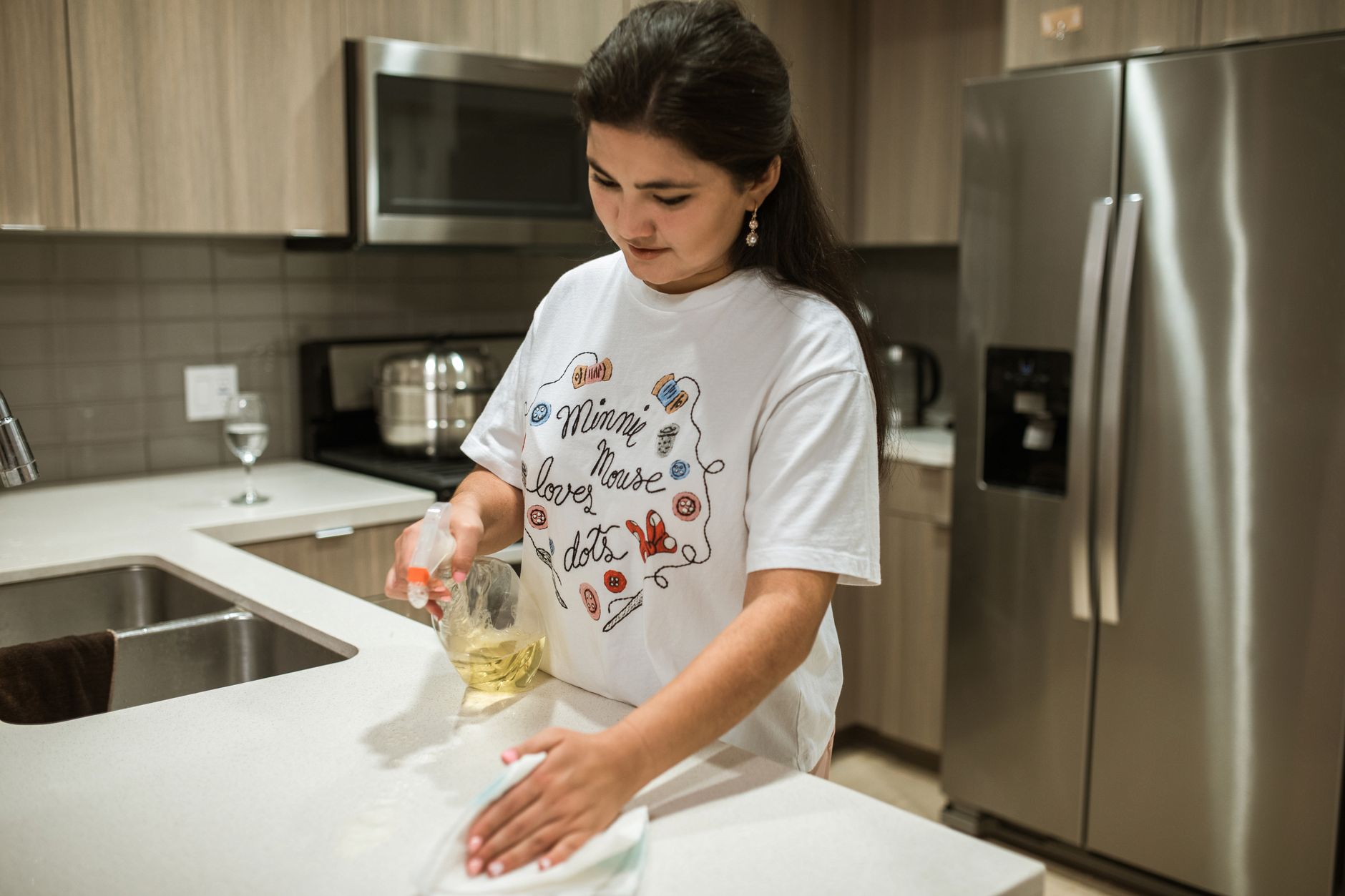
The Multi-Surface Everyday Cleaner is the bottle most people picture when they ask whether Mrs. Meyer’s is non toxic. The formula starts with water and plant-derived surfactants such as decyl glucoside and lauryl glucoside, adds a pH adjuster, and finishes with a fragrance blend. It cuts kitchen grease without leaving a film on sealed granite or quartz. The formula biodegrades in wastewater, and the brand sells a larger refill bottle to cut plastic waste. Those are genuine advantages over a conventional bleach spray, and the performance is good enough that most people will not miss the harsh stuff.
The gap is the word fragrance. Federal law lets a manufacturer list fragrance as one line on the ingredient panel, so fifty or more individual chemicals can hide behind that single term. Some of them are phthalates used as scent fixatives, and phthalates are one of the chemical families linked in human biomonitoring studies to endocrine activity. The European Union takes a different approach and requires the 26 recognized fragrance allergens to be named on the label once they exceed 0.01 percent in a rinse-off product. Mrs. Meyer’s does not do that here. You can look up individual ingredients yourself with our EWG Skin Deep database guide.
There is also no EPA Safer Choice label on the bottle, which matters because that program reviews every ingredient, fragrance included, against the Safer Chemical Ingredients List before approving a product. So the verdict on this specific item is mixed. It is a solid plant-derived cleaner with an undisclosed scent. If you want non-toxic cleaning products that work without that blind spot, the concentrates further down this list cover it cleanly.
Check the Mrs. Meyer’s Multi-Surface Cleaner on Amazon
Key strengths:
- ✅ Uses plant-derived surfactants that biodegrade in wastewater instead of persisting in waterways
- ✅ Cuts kitchen grease and light bathroom soap scum without streaking on sealed counters
- ✅ Available in a large refill bottle, which cuts plastic per use compared with single spray bottles
- ✅ No bleach, ammonia, or chlorine, so it will not off-gas the way a conventional bathroom spray does
- ✅ Widely stocked, so you are not ordering online and waiting a week for a refill
- ❌ Fragrance appears as one unnamed term, with no component breakdown anywhere on the label
- ❌ No EPA Safer Choice certification or independent third-party ingredient review
- ❌ The scent lingers in a small bathroom or kitchen, which is a real problem for asthma and fragrance sensitivity
Who it’s for: Households without fragrance sensitivity that want a decent plant-derived spray for daily counter and surface wiping.
2. Mrs. Meyer’s Clean Day Dish Soap , Best for hand-washed dishes when you rinse thoroughly
Mrs. Meyer’s dish soap leans on sodium lauryl sulfate and other plant-derived surfactants to break grease. A small squeeze goes a long way in a sink of hot water, and it rinses without the slick feeling some castile soaps leave behind on plates. For hand-washing pots and pans it performs close to a mainstream dish liquid, which is not something every green brand can claim. The scent is the same story as the spray. Pleasant, strong, and undisclosed at the component level.
Ethoxylated surfactants like SLS can carry trace 1,4-dioxane left over from manufacturing. The EPA’s IRIS assessment lists 1,4-dioxane as likely to be carcinogenic to humans, and the agency has set a drinking-water screening level of 0.35 micrograms per liter for a one-in-a-million cancer risk. The FDA has tested cosmetics for 1,4-dioxane for decades and generally found products well below 10 parts per million, which has long been the informal industry target. Dish soap matters because residue left on a plate goes straight into your next meal. Rinsing in hot water and using less soap solves most of that.
Preservatives are the other ingredient worth knowing about. Methylisothiazolinone shows up across this product category to stop bacteria growing in a wet bottle. The European Union banned MIT from leave-on cosmetics and caps it at 15 parts per million, or 0.0015 percent, in rinse-off products after contact dermatitis rates climbed through the 2010s. If your hands crack after a sink of dishes, the preservative is often the reason rather than the surfactant. Anyone with eczema should wear gloves with this bottle or switch to a fragrance-free soap. If you are rethinking all the surfaces your food touches, our non-toxic food storage guide covers the container side of the same problem.
Key strengths:
- ✅ Cuts grease fast, so a small amount handles a full sink of dirty dishes
- ✅ Rinses clean in hot water, leaving less residue on plates and utensils than many green soaps
- ✅ Plant-derived surfactants with a biodegradable formula that breaks down in wastewater
- ✅ Sold in a bulk refill size that lowers plastic use and the cost per wash
- ✅ Readily available at grocery stores, so replacing a bottle is never a project
- ❌ Fragrance remains a single undisclosed line item with no allergen breakdown
- ❌ Sodium lauryl sulfate and MIT-based preservatives can irritate dry or eczema-prone skin
- ❌ No third-party certification and no published independent testing for 1,4-dioxane on this formula
Who it’s for: Anyone who hand-washes dishes, does not have fragrance sensitivity, and is willing to rinse thoroughly.
3. Mrs. Meyer’s Clean Day Laundry Detergent , Best for lightly soiled loads in homes without skin sensitivities
Laundry detergent is where the Mrs. Meyer’s line earns the most scrutiny, and for good reason. Whatever is left in the fabric after the rinse cycle sits against your skin for hours. The detergent is HE compatible, plant-derived, and biodegradable, and it handles lightly soiled shirts, sheets, and towels fine. It is not built for heavy soil. There are no aggressive enzymes or optical brighteners doing the hard work, which is good for chemical exposure and bad for a grass-stained soccer jersey.
Fragrance in laundry products behaves closer to a leave-on exposure than a rinse-off one. That distinction matters. It is why dermatologists routinely point people with contact dermatitis toward fragrance-free detergent before they look anywhere else in the house. The CDC tracks chemical exposure in the home environment and notes that skin contact and inhalation are the two main routes for cleaning product ingredients. A detergent leaves both routes open on every load. If someone wakes up with itchy skin or a rash along the waistband line, swap the detergent first. Our guide to non-toxic laundry detergents covers the fragrance-free options that still handle stains.
Scent strength on this formula is above average, which is either the entire point or an instant dealbreaker. If you like the way the house smells on laundry day and nobody reacts, the bottle is defensible. If anyone in the home has eczema, asthma, or a fragrance sensitivity, skip it. There is no certification here to fall back on, and the fragrance components are not listed.
Key strengths:
- ✅ Plant-derived, biodegradable surfactants with no optical brighteners or chlorine bleach
- ✅ HE compatible with low suds, so it rinses out of front loaders without oversudsing
- ✅ Works well on everyday lightly soiled laundry, sheets, and towels
- ✅ Scent lasts through the dryer, which is exactly what some shoppers want
- ✅ Comes in a concentrated formula, so the bottle lasts longer than a standard jug
- ❌ Fragrance stays in the fabric and contacts skin for hours, including overnight
- ❌ No EPA Safer Choice certification and no component-level fragrance disclosure
- ❌ Weaker on set-in stains and heavy grease than enzyme-heavy mainstream detergents
Who it’s for: Households with no fragrance or skin sensitivity that want a plant-derived detergent for everyday lightly soiled loads.
4. Branch Basics All-Purpose Concentrate , Best for fragrance-free whole-home cleaning

Branch Basics sells one unscented concentrate that you dilute into spray bottles for counters, glass, floors, bathrooms, and laundry. The ingredient list is short and published in full. There is no fragrance at all, added or hidden. That single decision removes the biggest unknown in the Mrs. Meyer’s lineup, and it is the reason this concentrate keeps showing up in fragrance-free households.
The trade-off is friction. You buy a jug of concentrate, mix it with distilled water, and label your own spray bottles. Some people genuinely enjoy that routine. Others find it annoying and drift back to a ready-to-use spray within a month. Be honest with yourself about which person you are before buying. Cost per use is low once you account for dilution, though the upfront purchase runs higher than a single spray bottle. It does not disinfect, and neither does Mrs. Meyer’s. Neither brand is an EPA-registered disinfectant, so neither one kills norovirus on a counter. If you need disinfection, clean first and then apply a registered product.
For households with asthma, fragrance sensitivity, or a baby crawling on the floor, this is the option that removes the question entirely instead of managing it. Because it covers laundry too, you eliminate the detergent residue problem in the same purchase. The unscented formula will not make your house smell like basil, and that is the whole point.
Check the Branch Basics Concentrate on Amazon
Key strengths:
- ✅ Fragrance-free formula with a fully published ingredient list you can read in one sitting
- ✅ One concentrate replaces counter spray, glass cleaner, bathroom cleaner, and laundry detergent
- ✅ Unscented formula suits asthma, eczema, and fragrance-sensitive households
- ✅ Dilution drops the cost per use well below ready-to-use sprays over time
- ✅ No dyes, no optical brighteners, and no undisclosed preservative blend to research
- ❌ Requires mixing, labeling, and storing your own bottles, which is real ongoing work
- ❌ Higher upfront cost than a single ready-to-use spray bottle
- ❌ Not a disinfectant, so it will not kill viruses or bacteria on its own
Who it’s for: Fragrance-sensitive households, or anyone who wants one unscented concentrate to handle counters, floors, glass, and laundry.
5. ECOS Laundry Detergent , Best for an EPA Safer Choice certified laundry detergent
ECOS, made by Earth Friendly Products, produces a laundry detergent that carries the EPA Safer Choice label. That label is the certification most shoppers should look for first, because it means something specific. The EPA reviews every ingredient in the formula against its Safer Chemical Ingredients List before it approves the product. Fragrance components are part of that review rather than exempt from it. Very few cleaning brands clear that bar, and Mrs. Meyer’s is not one of them.
The formula is plant-derived, pH balanced, and free of dyes. It is also widely available in stores and online, which matters because a great product you cannot buy reliably is not much use. Performance on everyday laundry is solid. Performance on heavy grease or set-in stains is average, similar to the Mrs. Meyer’s detergent, so neither is the right pick for a mechanic’s work shirts.
Fragrance is still present in the scented versions, but the disclosure requirement is the difference. Under Safer Choice, the fragrance has to be reviewed and the ingredients have to meet the program’s hazard criteria. For a family dealing with skin irritation from detergent, that review is the useful part. If you want the same scrutiny across the rest of your cleaning cabinet, the framework in our non-toxic cleaning products guide applies it room by room.
Key strengths:
- ✅ Carries the EPA Safer Choice label, meaning every ingredient was reviewed against the Safer Chemical Ingredients List
- ✅ Plant-derived, pH balanced formula with no dyes or optical brighteners
- ✅ Fragrance components are reviewed by the EPA rather than hidden behind a single trade-secret term
- ✅ Widely available in stores and online, so restocking is not a hassle
- ✅ Performs comparably to Mrs. Meyer’s on everyday laundry at a similar price per load
- ❌ Average stain performance, so it struggles with heavy grease or set-in stains
- ❌ Scented versions still contain fragrance, which some sensitive users react to regardless of certification
- ❌ Packaging is a plastic jug, so it does not solve the plastic waste problem the way a concentrate does
Who it’s for: Shoppers who want a third-party certified laundry detergent and are willing to accept average stain performance in exchange.
Frequently Asked Questions
Is Mrs. Meyer's Clean Day non toxic?
It depends on your definition. The surfactants are plant-derived and biodegrade in wastewater, and the products contain no bleach, ammonia, or chlorine. But the fragrance blend is listed as one undisclosed term, and the brand holds no EPA Safer Choice certification. Most households tolerate it fine, while fragrance-sensitive households should look elsewhere.
Does Mrs. Meyer's disclose all of its ingredients?
It discloses more than a conventional cleaner but not everything. Water, plant-derived surfactants, and pH adjusters are named on the label. The fragrance is listed as a single line item, which federal law allows. That one word can cover dozens of individual chemicals, including phthalates used as scent fixatives.
Is Mrs. Meyer's safe to use around pets?
The multi-surface spray and dish soap are low hazard for dogs and cats once dry and diluted. The bigger issue is concentrated essential oils, since some are irritating to cats in particular. Keep pets off a freshly sprayed floor until it dries, and store bottles out of reach.
Is Mrs. Meyer's EPA Safer Choice certified?
No. The EPA Safer Choice label requires the manufacturer to submit every ingredient, including fragrance components, for review against the Safer Chemical Ingredients List. Mrs. Meyer’s does not carry that label. ECOS and several other brands do.
Why is fragrance a problem if I like the smell?
Liking a scent and reacting to it are two different things. Fragrance chemicals are a leading trigger for contact dermatitis and a common asthma irritant. If nobody in your home has reacted, the risk is low. If someone has eczema or wheezing, fragrance is the first thing to remove from the house.
What is a better fragrance-free alternative to Mrs. Meyer's?
A diluted all-purpose concentrate with a fully published ingredient list is the closest thing to a guaranteed fragrance-free swap. Branch Basics Concentrate and similar unscented products replace counter spray, glass cleaner, bathroom cleaner, and laundry detergent with one bottle and no added scent.
What Should You Remember?
- Fragrance is the main unknown. Mrs. Meyer’s lists fragrance as one term, and that single word can hide dozens of chemicals, including phthalates used as fixatives.
- No EPA Safer Choice label. The brand does not carry the one certification that requires every ingredient, fragrance included, to be reviewed by the EPA.
- Dish soap rinses off, laundry detergent does not. Fragrance left in fabric sits against skin for hours, which is why detergent is the riskiest bottle in the line.
- Plant-derived is not the same as non toxic. Coconut-based surfactants still carry trace manufacturing residues like 1,4-dioxane.
- Fragrance-free beats low-fragrance every time for households with asthma, eczema, or a crawling baby.
- None of these are disinfectants. Mrs. Meyer’s, Branch Basics, and ECOS are cleaners. Killing viruses on a counter requires an EPA-registered product.
- Check certifications before the marketing claim. A green bottle with garden artwork tells you less than a Safer Choice mark or a published full ingredient list.
This article is for general information only and is not medical, legal, or regulatory advice. Chemical-safety claims and product choices should be verified against current scientific research and the guidance of relevant agencies (EPA, FDA, EWG, CDC). Always follow manufacturer instructions and consult a qualified professional for health or exposure concerns.