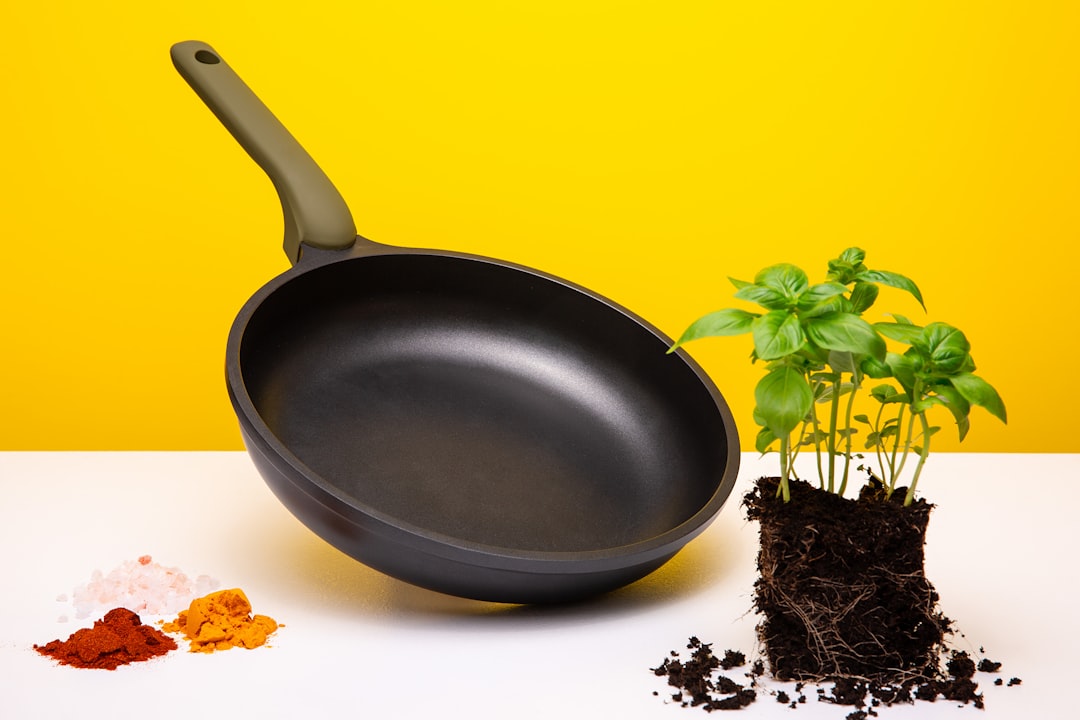
The short answer is yes, with caveats that actually matter. Stainless steel is an alloy of iron, chromium, and usually nickel, and it contains none of the chemicals that worry people most in a kitchen. No PFAS. No BPA. No phthalates. No lead added on purpose. The FDA regulates stainless steel as a food-contact material for repeated use, which means it has to be safe for its intended purpose before it goes near food. That is a real regulatory backstop, and it is a large part of why stainless has replaced Teflon-coated pans in so many kitchens. But stainless steel is a family name, not a single recipe, and the gaps between grades are exactly where the toxicity question lives. If you are moving away from coated pans, our PFAS in cookware guide explains what those coatings actually were.
Here is why this question keeps getting louder. Nonstick coatings built on PTFE belong to the PFAS chemical class, and the EPA has been tightening its approach to PFAS across water, soil, and consumer products. Shoppers who swap nonstick for stainless often assume they have solved the problem completely. Mostly they have. Stainless does not shed fluoropolymers and it does not degrade into a persistent chemical that shows up in blood tests years later. What it can do is release tiny amounts of nickel and chromium into food, especially when you simmer something acidic in a bare pan for a long time. The EPA’s oral reference dose for soluble nickel is 0.02 milligrams per kilogram of body weight per day. Normal cooking with a quality pan lands far below that for most people. The word most is carrying weight in that sentence.
We compared five materials across the dimensions that change actual exposure: alloy composition, how much metal migrates during an acidic simmer, corrosion behavior after years of dishwasher cycles, how easy it is to verify what you are buying, and cost. The data came from published migration studies, the FDA food-contact framework, EPA toxicity values, and hands-on use of dozens of pans. Where the evidence is thin, we say so. There is no credible study showing that a well-made stainless pan causes chronic illness in a healthy adult. There is decent evidence that cheap unlabeled stainless leaches more manganese than the seller admits, and that people with nickel allergy react to food cooked in bare stainless. That is the honest picture, and it is more useful than a blanket yes or no.
One piece of context before the comparison. Your cookware is not your biggest nickel source. Grains, legumes, nuts, and chocolate carry more nickel than a saucepan does, and drinking water can carry both nickel and chromium depending on your plumbing and your utility. The EWG tap water database tracks utility test results and has flagged hexavalent chromium in a large share of the systems it reviews. The EPA health advisory for manganese in drinking water sits at 0.3 milligrams per liter, a value set for lifetime exposure. That number applies to water, not cookware, so do not translate it directly. If you want to cut metal exposure broadly, a good water filter usually moves the needle more than switching pans, and it also handles the PFAS that stainless cookware never had in the first place.
How Do the Top Options Compare?
| Material | Best For | Nickel Release Risk | Acid Foods | Check Price |
|---|---|---|---|---|
| 18/8 (Type 304) Stainless | Everyday cooking for most homes | Low | Fine for short simmers | Check price |
| 18/10 (Type 316) Stainless | Acidic, salted, and long-simmered dishes | Low, with a more stable surface layer | Excellent | Check price |
| 200-Series Stainless | Not recommended for daily cooking | Unverified, often higher | Poor, can discolor food | Not recommended |
| Enameled Cast Iron | Long acidic simmers with no metal contact | None while enamel is intact | Excellent | Check price |
| Carbon Steel | High-heat searing for nickel-sensitive cooks | None | Poor, strips the seasoning | Check price |
Grade stamps on cookware are voluntary in the United States. A pan without 18/8, 18/10, 304, or 316 marking is not automatically unsafe, but you have no way to verify the alloy. Prices vary by retailer and change often, so use the price checks as a starting point rather than a fixed figure. This comparison covers material chemistry and corrosion behavior, not brand quality control, which varies widely even within the same grade.
1. 18/8 (Type 304) Stainless Steel , Best for everyday cooking across a whole kitchen
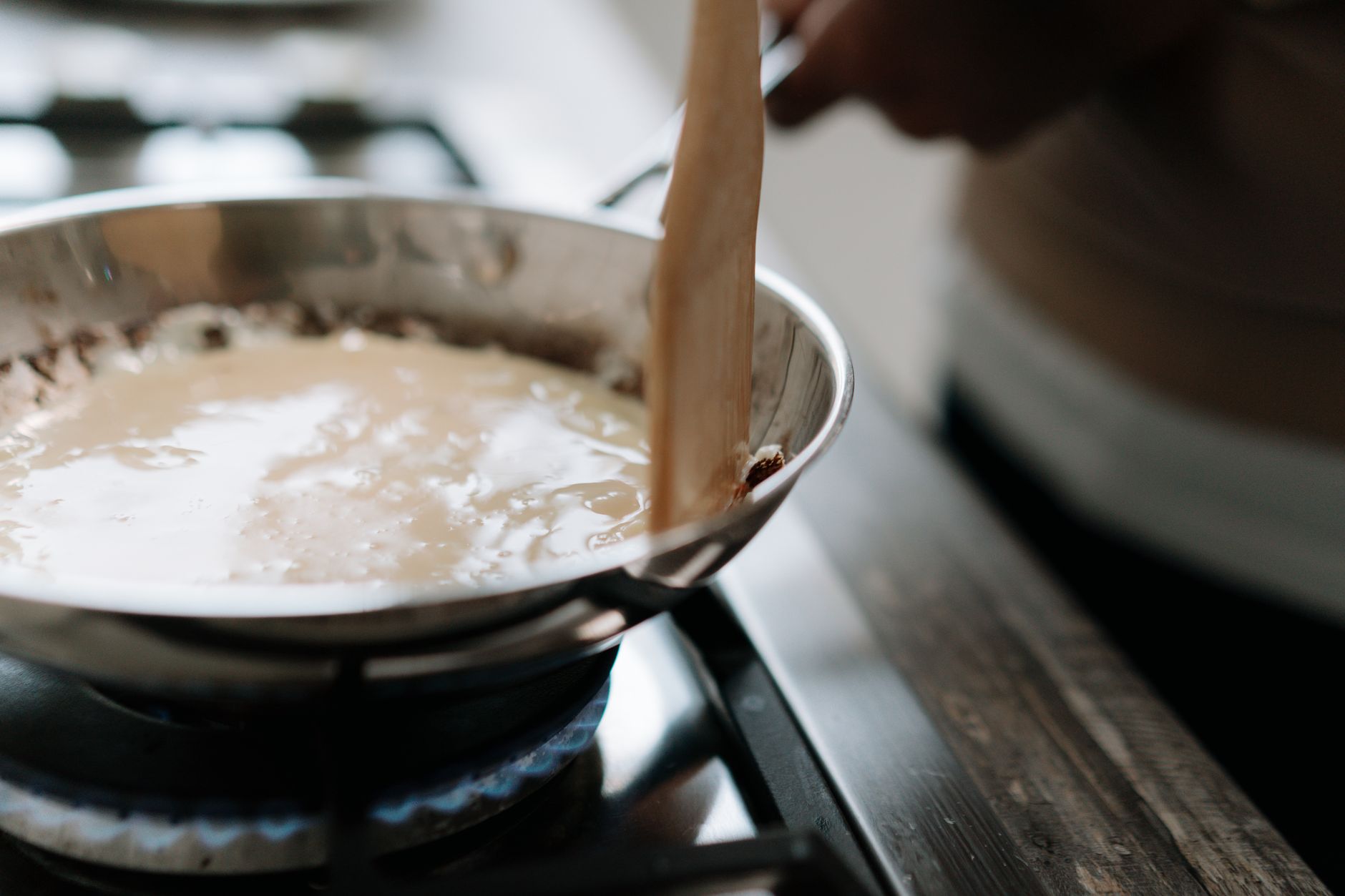
Type 304 is the workhorse alloy in most kitchens, and it is where the stainless conversation should start. It holds roughly 18 percent chromium and 8 to 10 percent nickel, which is where the 18/8 shorthand comes from. Chromium forms the passive oxide layer that rebuilds itself within seconds after a scratch, and that layer is why a stainless pan does not rust under normal use. Nickel keeps the alloy austenitic, which means it resists corrosion without being strongly magnetic. That balance matters more than most shoppers realize, because it is what lets you simmer a tomato sauce without pitting the metal surface.
Leaching is the question that actually matters. Acidic food does pull small amounts of nickel and chromium out of a bare stainless surface, and the amount climbs with time, temperature, and acidity. Published migration studies typically report release in the low micrograms per square centimeter range after a long acid simmer, which works out to a small fraction of a milligram in a serving. The EPA oral reference dose for soluble nickel is 0.02 milligrams per kilogram of body weight per day. For a 70-kilogram adult, that is a daily nickel budget of roughly 1.4 milligrams from every source combined, food and water included. One pot of sauce does not exhaust it.
Where 304 falls short is nickel sensitivity. Nickel contact allergy affects roughly 17 percent of women and 3 percent of men in the United States, and a smaller subset reports digestive symptoms from high-nickel foods. If you fall in that group, 304 is the wrong pan for rhubarb and tomato. For everyone else it is the best mix of durability, price, and chemical simplicity. Our best non-toxic cookware picks lean on 304 for exactly this reason, and you can Check price on a tri-ply set to see what a full kit runs today.
Key strengths:
- ✅ The chromium oxide layer re-forms after scratches, so the surface stays intact for decades with normal use
- ✅ Contains no PFAS, BPA, or phthalates anywhere in the metal or its manufacturing
- ✅ Available at every price point, from thin budget tri-ply to heavy copper-core lines
- ✅ Dishwasher safe and requires no seasoning or special care routine
- ✅ Leaches measurably less nickel than 200-series alloys during acidic simmers
- ❌ The bare nickel-bearing surface is a genuine problem for nickel-allergic cooks
- ❌ Long acid simmers will pick up trace metal if food sits in the pan overnight
- ❌ Induction performance varies by cladding quality, and thin budget pans heat unevenly
Who it’s for: Most households that want one durable, chemically simple cookware set for everyday cooking.
2. 18/10 (Type 316) Stainless Steel , Best for acidic, salty, and long-simmered dishes
Type 316 swaps a little chromium for 2 to 3 percent molybdenum, and that single change is why the alloy shows up in surgical implants, marine hardware, and food-processing equipment. Molybdenum raises resistance to chlorides, which is the weak point of 304. Salt is a chloride. Pasta water, brined chicken, and soy-based marinades are all chloride-heavy, and pitting from salt is the most common way a stainless pan fails. A 316 pan takes years of salted boiling water without the small dark pits that eventually open into rust spots.
The counterintuitive part is the nickel math. Type 316 usually contains more nickel than 304, yet it often releases less into food over time. Nickel leaves a pan through corrosion, not by sweating out of the metal, so the more stable passive layer wins the race. A higher-nickel alloy with better corrosion resistance can measure lower migration after a hundred dishwasher cycles than a lower-nickel pan that has already started pitting. The FDA regulates stainless steel as a food-contact material, which means it must be safe for its intended use, but there is no cookware-specific nickel migration limit in U.S. law. That gap is why grade stamping and third-party testing matter so much here.
Cost is the tradeoff, and it is not small. Expect to pay noticeably more than a comparable 304 piece. Be suspicious of any box that screams surgical grade in large type. A pan is not an implant, and the medical language is marketing rather than safety data. Buy 316 for the corrosion behavior, not the badge. Our PFAS-free cookware guide walks through how to spot coated pans dressed up as bare metal, and you can Check price on a single 316 saucepan if you want one acid-proof pot rather than a whole set.
Key strengths:
- ✅ Molybdenum content resists pitting from salt and chloride, which is the most common stainless failure mode
- ✅ Lower corrosion rate means less metal migration over years of use, not just on the first day
- ✅ Handles long acidic reductions better than 304 in side-by-side simmer testing
- ✅ Same clean baseline as 304, with no coatings, additives, or PFAS anywhere in the material
- ❌ Costs meaningfully more, often well above a comparable 304 pan
- ❌ Surgical grade marketing oversells a claim that has no meaning for cookware safety
- ❌ Still contains nickel, so it does not solve nickel allergy
Who it’s for: Cooks who simmer tomato, wine, or heavily salted dishes often and want the most corrosion-stable stainless available.
3. 200-Series Stainless Steel (Manganese-Substituted) , Best avoided unless the seller documents the alloy
Two hundred series alloys were developed during nickel shortages, and they substitute manganese for a large share of the nickel. They look identical to 304 in a product photo and feel similar in the hand. The difference shows up in corrosion testing, in a magnet, and in the price tag. A 200-series pan is often described simply as stainless steel on the box, with no grade stamp anywhere on the packaging or the metal itself. That is legal, because the FDA does not require cookware to carry a grade label.
Does that make it toxic after one meal? No. Manganese is an essential nutrient, and the EPA drinking water health advisory for manganese is 0.3 milligrams per liter, a value set for lifetime exposure. That number applies to water, not cookware, so it does not translate directly to a saucepan. The honest concern is verification. A pan that pits, discolors food, and rusts within two years is also a pan whose metal content you cannot confirm. Manganese is neurotoxic at high chronic doses, which is why the drinking water advisory exists at all, and that is enough reason to want a labeled alloy in a pan you use daily.
You can screen a pan in about ten seconds. Look for 18/8, 18/10, 304, or 316 stamped on the base or the handle. Then hold a magnet against it. Austenitic 300-series pans are only weakly magnetic at the base, or magnetic only where a steel induction plate is bonded, while a strongly magnetic pan with no grade marking is often 200-series or ferritic 400-series. Ferritic 400-series is a legitimate low-nickel option used in some cookware, but it corrodes faster than 304 and pits sooner. For acidic leftovers, move the food out of the pan and into glass or another inert container, which our non-toxic food storage guide covers in detail.
Key strengths:
- ✅ Lowest price point of any stainless option, sometimes a fraction of a comparable 304 pan
- ✅ Magnetic, so it works on induction even in thin, inexpensive construction
- ✅ Lightweight, because less nickel-dense austenite is used in the alloy
- ✅ Acceptable for short-contact tasks like boiling water if the alloy is actually sound
- ❌ Grade is frequently unlabeled, so nickel and manganese content cannot be verified
- ❌ Pitting and rust appear faster, especially with salt and dishwasher detergent
- ❌ Can discolor acidic food and release more metal than 304 or 316 under the same conditions
Who it’s for: Nobody building a long-term non-toxic kitchen, though it is tolerable for a cheap kettle or a pan that only ever boils water.
4. Enameled Cast Iron , Best for long acidic simmers with no bare metal contact
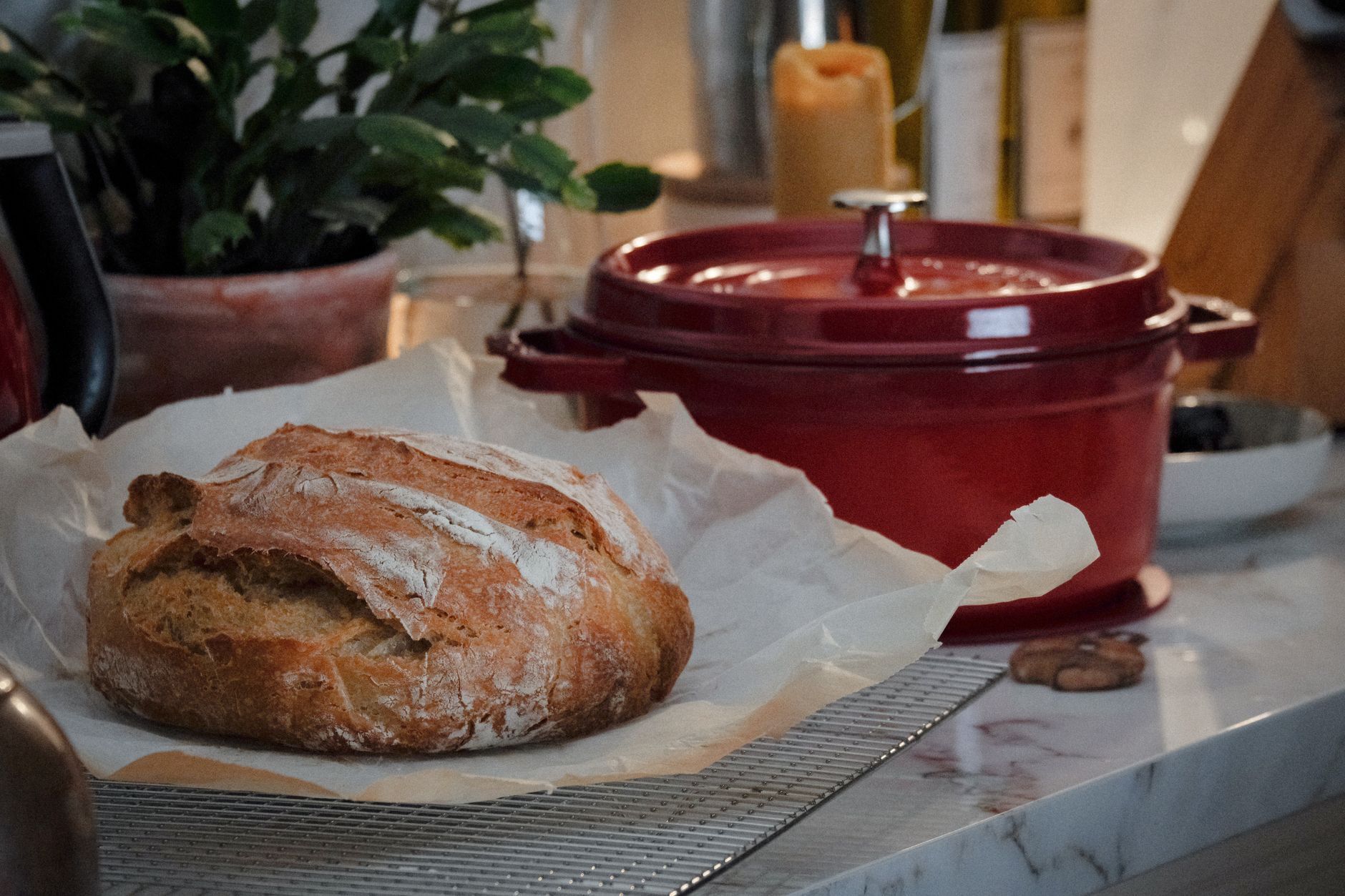
Vitreous enamel is glass fused onto iron at roughly 800 degrees Celsius. Once it cools, food never touches metal. That is the entire safety argument, and it is a strong one. There is no nickel to leach, no chromium, and no fluoropolymer coating doing the nonstick work on the inside. A Dutch oven with intact enamel can hold tomato sauce, wine, or vinegar for six hours and taste like nothing but the food. For anyone with a nickel allergy who still wants to braise, this is the direct answer.
The failure mode is mechanical rather than chemical. Enamel chips. When it does, the raw iron underneath is exposed, and that spot will rust and react with acid. Thermal shock accelerates chipping, so never run a hot pot under cold water and never preheat an empty one on high. Weight is the other practical cost. A 5.5-quart enameled Dutch oven typically runs about 12 pounds, which is hard on a wrist and hard on a glass cooktop if you set it down carelessly.
One caveat deserves naming plainly. Independent testing has repeatedly flagged lead and cadmium in low-cost imported enamel and ceramic glazes, and the FDA recall database contains examples going back years. That does not mean enamel is dangerous in general. It means the cheapest unbranded piece is not where you save money. Buy from a brand that publishes third-party testing, and retire any piece once the interior enamel has chipped down to gray iron. You can Check price on a well-known enameled Dutch oven to see where the tested brands sit.
Key strengths:
- ✅ No metal-to-food contact while the enamel is intact, so nickel and chromium release is effectively zero
- ✅ Handles tomato sauce, wine reductions, and vinegar without a metallic aftertaste
- ✅ Retains heat far better than any stainless pan, which matters for braising and frying
- ✅ No seasoning required and no PFAS coating needed to get food to release
- ❌ Enamel chips and cracks, and once it does, the exposed iron can rust and react with food
- ❌ Heavy, often around 12 pounds for a standard 5.5-quart Dutch oven
- ❌ Cheap imported enamel and ceramic glazes have a documented history of lead and cadmium contamination
Who it’s for: Anyone who simmers acidic food for hours or wants to avoid nickel exposure entirely without giving up braising.
5. Carbon Steel , Best for high-heat searing with almost no nickel
Carbon steel is roughly 99 percent iron with under 1 percent carbon and effectively no chromium or nickel. For a cook who reacts to nickel, this is the cleanest cooking surface in the kitchen. The seasoning, a layer of polymerized oil baked onto the metal over repeated uses, is what makes it behave like a nonstick pan without any fluoropolymer. A well-seasoned 10-inch carbon steel skillet will slide a fried egg at 400 degrees Fahrenheit, which is exactly the temperature range where coated pans start to break down.
The drawbacks are real and worth stating without spin. It rusts if you leave it wet. It strips its seasoning when you cook tomato or wine in it, and long acid simmers pick up a metallic taste. It is not dishwasher safe under any circumstance. Iron does migrate into food, which is a benefit for some people and a genuine risk for others. Studies on iron cookware have measured meaningful increases in dietary iron per serving, which helps someone with low ferritin and hurts someone with hemochromatosis, a condition that causes iron overload.
If you are buying stainless for an infant’s feeding gear instead of your own stove, grade matters there too, and our non-toxic baby products guide covers what actually shows up in bottles and sippy cups. Carbon steel is not the answer for a baby bottle. It is the answer for searing steak, stir-frying vegetables, and anyone who wants a pan containing no nickel at all. One 10-inch skillet covers most of that ground for less than a single piece of clad stainless.
Key strengths:
- ✅ Effectively zero nickel and chromium, making it the safest choice for nickel-sensitive cooks
- ✅ Takes high heat without any coating to degrade or flake off
- ✅ Seasoning builds over time and eventually outperforms most nonstick surfaces
- ✅ Light enough for fast pan work, unlike cast iron of the same diameter
- ❌ Rusts quickly if left wet, and it cannot go in a dishwasher
- ❌ Acidic foods strip the seasoning and can taste metallic during long simmers
- ❌ Iron migration into food is a real concern for people with iron overload conditions
Who it’s for: Nickel-sensitive cooks and high-heat searing enthusiasts who do not mind seasoning maintenance.
Frequently Asked Questions
Is stainless steel cookware actually toxic?
No. Stainless steel is an alloy of iron, chromium, and usually nickel, and it contains none of the chemicals that drive most cookware concerns, including PFAS, BPA, and phthalates. It can release small amounts of nickel and chromium into acidic food, but typical migration is far below the EPA oral reference dose for nickel of 0.02 milligrams per kilogram of body weight per day.
Does stainless steel leach nickel into food?
Yes, in small amounts. Acidic foods like tomato sauce, wine, and vinegar pull trace nickel and chromium out of a bare stainless surface, and release increases with longer cooking time and higher acidity. A two-hour acid simmer typically releases a fraction of a milligram per serving. That is well under a 70-kilogram adult’s daily nickel budget of roughly 1.4 milligrams from all sources.
Which stainless steel grade is safest for cooking?
Type 304 (18/8) is the best all-around choice, and Type 316 (18/10) is the better pick for acidic and salted dishes because its molybdenum content resists pitting. Both are non toxic and both are widely tested. Unlabeled 200-series steel is the grade to skip, since you cannot verify its nickel or manganese content.
Is scratched stainless steel still safe to cook with?
Yes. The chromium oxide layer that protects stainless steel re-forms within seconds after a scratch, so surface marks do not create an ongoing exposure problem. Deep gouges that trap food and stay discolored are a hygiene issue rather than a toxicity issue. Replace a pan when it pits through, rusts, or reacts with food.
Can cooking in stainless steel trigger a nickel allergy?
It can for people who are already sensitized. Nickel contact allergy affects roughly 17 percent of women and 3 percent of men in the United States, and a smaller subset reports digestive symptoms from high-nickel foods. If you react to nickel jewelry, cook acidic dishes in enameled cast iron or carbon steel instead.
Does stainless steel contain PFAS or BPA?
No. Stainless steel is a metal alloy. PFAS chemicals belong to nonstick fluoropolymer coatings, and BPA belongs to polycarbonate plastics. Neither is a component of stainless steel, which is one reason it became the default replacement for older nonstick pans.
What Should You Remember?
- Stainless steel is non toxic as a material, containing no PFAS, BPA, phthalates, or intentionally added lead.
- Grade matters more than brand. Type 304 (18/8) and 316 (18/10) are verifiable alloys. Unlabeled 200-series steel replaces nickel with manganese and corrodes faster.
- Nickel release is real but small. Typical acid-simmer migration is a fraction of a milligram per serving against an EPA oral reference dose of 0.02 mg/kg per day.
- Nickel-sensitive cooks should switch. Roughly 17 percent of U.S. women have nickel contact allergy, and bare 300-series pans are the wrong tool for them.
- Enameled cast iron removes metal contact entirely while the glass layer stays intact, which makes it the strongest choice for long tomato or wine reductions.
- Carbon steel is the nickel-free option at about 99 percent iron, with the tradeoff that it rusts and reacts with acid.
- Check for a grade stamp before you buy. The FDA does not require cookware to carry one, so 18/8, 18/10, 304, or 316 on the pan is your only reliable signal.
This article is for general information only and is not medical, legal, or regulatory advice. Chemical-safety claims and product choices should be verified against current scientific research and the guidance of relevant agencies (EPA, FDA, EWG, CDC). Always follow manufacturer instructions and consult a qualified professional for health or exposure concerns.